
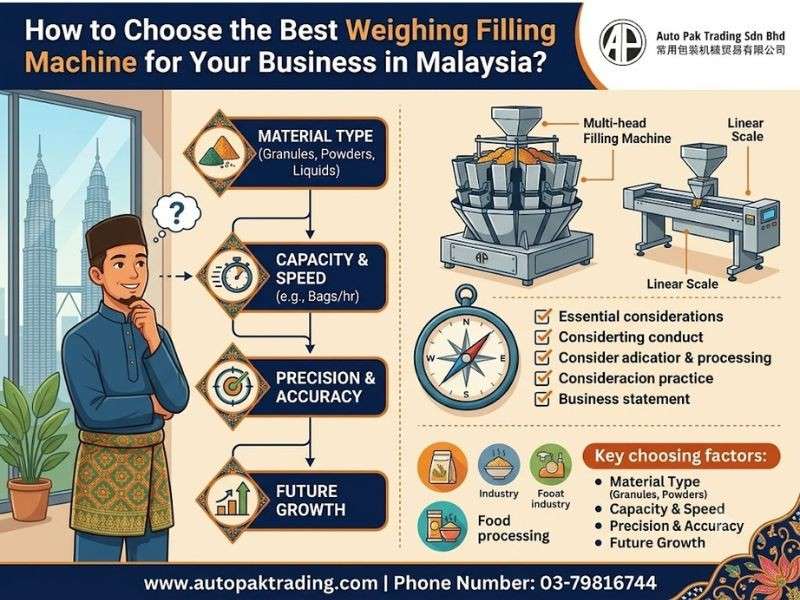
A dependable filling machine sparks a revolution in your packaging hall. Every filling machine must align with your unique product traits. Auto Pak Trading supplies a weighing filling machine that slices giveaway and lifts accuracy. Consequently, your filling machine choice secures your brand’s future. Therefore, your weighing filling equipment should integrate smoothly with existing conveyors. Moreover, a modern filling system saves valuable labour hours. Furthermore, this filling machine delivers consistent fills cycle after cycle. In the end, your weighing filling system becomes the heart of efficient production.
Identify Your Production Requirements
Moreover, different materials demand distinct mechanisms. A free-flowing granule moves easily through an auger filler. Meanwhile, a sticky powder might clump and demand a vibratory tray. Therefore, you must match the machine’s feeding system to your exact substance. Furthermore, an automatic filling machine that handles tricky textures will slash your waste. This careful pairing stops bridging and rat-holing inside the hopper.
Document your daily output target.
List all product varieties handled.
Note your packaging sizes clearly.
Map your current factory workflow.
Assess Your Product Nature
Study your powder’s flow traits.
Check granule size and stickiness.
Measure your liquid’s viscosity level.
Spot any dusty or fragile items.
Calculate Speed and Volume Demands
Set your packs-per-minute goal now.
Weigh each fill amount precisely.
Plan for seasonal demand spikes.
Leave room for future growth.
Consequently, a slow machine will bottleneck your entire line. An overly fast model wastes energy and money. You must discover your sweet spot. Specifically, note your peak shift requirements. In addition, these filling machine that cannot keep pace during busy months will hurt your reputation. Therefore, always pick a system that exceeds your current top speed by a small, safe margin.
Choose Machines with Durable Construction
A machine built with flimsy components will betray you. Harsh factory environments demand rugged construction. Moreover, a stainless steel body resists corrosion from spices, salts, or moisture. Furthermore, this material makes sanitation swift and simple. Consequently, you protect both your product’s purity and your workers’ safety. Your weighing filling equipment must endure frequent washdowns without rust or failure.
Seek stainless steel contact parts.
Demand a user-friendly control panel.
Inspect the frame’s sturdiness closely.
Confirm easy disassembly for cleaning.
Opt for Durable Build Materials
Choose food-grade stainless steel surfaces.
Avoid painted frames that peel.
Insist on IP-rated dust protection.
Pick robust, sealed load cells.
Prioritise Intuitive Controls
Hunt for a colour touchscreen display.
Demand multi-language menu options.
Find recipe storage for quick swaps.
Ensure error alerts pop up clearly.
Your team will embrace a system that guides them. A baffling interface invites costly human mistakes. Therefore, chase a controller that stores dozens of product recipes. This memory slashes changeover time dramatically. Furthermore, visual prompts and one-touch calibration ignite operator confidence. In addition, clear fault messages speed up troubleshooting and shrink downtime significantly.
Assess Filling Accuracy and Control
A brilliant weighing system chases perfection on every cycle. It starts fast and then creeps to a final trickle. This dual-speed method eliminates overfilling and giveaway. Moreover, smart sensors reject external vibrations from nearby conveyor belts. Consequently, your fill weights stay tight and legal. This precision guards your profit margin directly. A reliable weighing filling system will pay for itself through product savings alone.
Scrutinise the weighing resolution offered.
Test the machine’s anti-vibration logic.
Learn its auto-tare function method.
Understand the feedback loop speed.
Unlock Precision with Smart Sensors
Check for electromagnetic force restoration tech.
Demand digital filtering against floor shakes.
Verify the twin-speed filling approach.
Confirm automatic drift compensation exists.
Master Multi-Product Versatility
Store unlimited jobs in memory.
Change from nuts to powders swiftly.
Adjust the drop height automatically.
Switch between free-flow and non-free-flow.
Your business might expand into new items soon. Therefore, you need a machine that bends without breaking. Specifically, you should select a model with quick-release hoppers and tool-free adjustments. Meanwhile, an this filling machine that adapts to different bag sizes and materials preserves your agility. In addition, this flexibility lets you accept diverse contracts without buying extra equipment.
Plan a Smooth Factory Integration
A massive machine will suffocate a small factory. Conversely, a cramped setup slows workers. Therefore, you must measure every inch. Moreover, choose a vertical form-fill-seal style if floor space is scarce. These units stretch upward rather than outward. Consequently, you gain high speed in a neat, tidy footprint. This strategy frees up room for other vital equipment.
Measure your available floor area.
Check ceiling height for hoppers.
Note power supply and air requirements.
Study your upstream conveyor flow.
Fit the Footprint Seamlessly
Sketch a layout before you order.
Prioritise compact vertical designs first.
Leave space for cleaning access.
Align the discharge with your bagger.
Ensure Simple Upkeep Routines
Demand tool-less belt removal always.
Seek self-lubricating bearing points.
Verify easy load cell access.
Check for modular electrical panels.
Neglecting maintenance leads to a sudden breakdown. Therefore, a design that encourages daily care will run for decades. Specifically, look for open frame architecture that does not trap debris. Furthermore, your maintenance crew will thank you for colour-coded wiring and clear schematics. Meanwhile, an automatic filling machine that simplifies belt swaps and cleaning prevents long production standstills. In addition, a local supplier with quick-response engineers becomes your safety net.
Uncover Hidden Costs Before You Buy
A cheap sticker price often hides a punishing total cost. You must peer beyond the initial quote to spot the real burden. Spare parts availability, energy hunger, and film waste all devour your budget. Therefore, you should demand a detailed lifecycle cost breakdown from any supplier. A machine that guzzles air or demands exotic components will drain your profits silently. Consequently, a careful investigation now shields your cash flow from nasty surprises later.
Question the Consumable Expenses
Calculate film width waste per bag.
Measure compressed air consumption hourly.
Estimate wear-part replacement frequency.
Audit energy draw during standby.
Final Thought
Your investment in sturdy equipment rewards you daily with precision. A smart machine adapts as your product line grows. Auto Pak Trading helps you commission a weighing filling machine that fits your floor perfectly. Ultimately, a high-grade machine slashes your operational headaches. Therefore, your machine strategy must prioritise long-term support. Remember, the right machine keeps your customers smiling. Indeed, this machine will anchor your packaging success. Thus, your machine journey concludes with lasting peace of mind.
FAQs
Q1. How do I know if I need a net weight or gross weight system?
Ans. Choose net weight when your container weight varies. Gross weight works best for fixed-weight packs. Your product’s flow traits and target accuracy will steer this choice clearly. Test both methods with your material first.
Q2. Can this equipment handle dusty powders without jamming?
Ans. Yes, a dust-tight enclosure and a vibratory tray defeat bridging. These features keep the load cell clean and the material moving. Proper dust extraction also shields sensitive weighing parts from clogging.
Q3. What is the typical lead time for delivery in Malaysia?
Ans. Standard units usually ship in four to six weeks. Customised lines with special hoppers may extend this to eight weeks. Always confirm the timeline with your supplier before placing an order.