
Top Industries That Benefit from Using a Paste Filling Machine
In industries where thick, viscous or semi-liquid products have to be dispensed accurately and consistently into containers, a paste filling machine is used. The key sectors are food manufacturing, cosmetics, pharmaceuticals and industrial chemicals. Whether it’s sauces and honey, or creams, gels and adhesives, these machines can fill anything – they are a must for any production line that handles non free-flowing materials.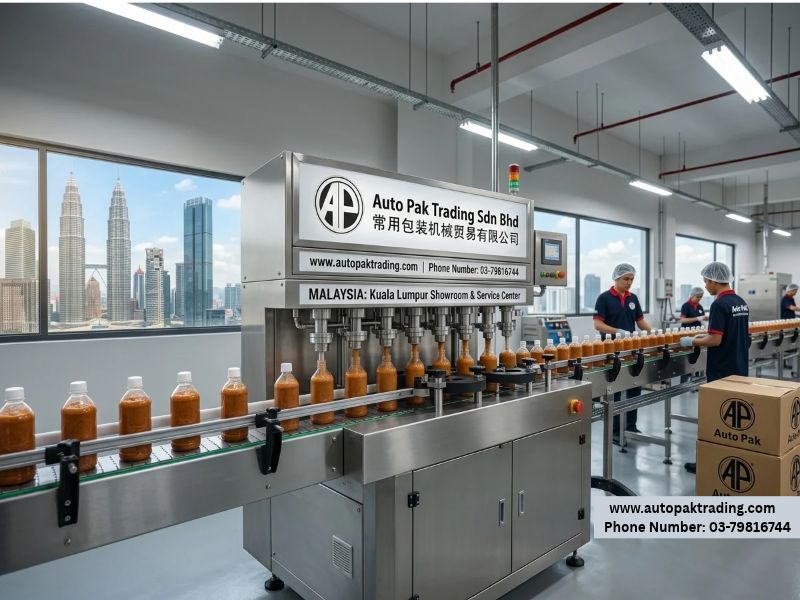
If your production line includes anything that pours slowly, jams standard nozzles, or requires precise dosing by weight or volume, a paste filler is probably your best option. Let’s look at exactly what industries use this equipment and why it is important for manufacturers in Malaysia.
Why Viscous Products Demand Specialised Filling Equipment
Standard liquid filling machines are built for water-like consistency. The moment you introduce a product with high viscosity — think chilli paste, face cream, or industrial grease — conventional equipment struggles. It under-fills, drips, or clogs entirely.
Paste filling machines use mechanisms such as piston fillers, gear pumps or rotary pumps which are designed to fill viscous materials without air pockets, spills or variations in volume. For manufacturers this means less wastage in their product, uniform pack weights and meeting regulatory requirements – all of which are very important in the Malaysian market.
Food and Beverage Manufacturing
Probably the largest user of the paste filling technology is the food industry. Malaysia’s processed food industry continues to grow with food manufacturing playing an important role in the country’s industrial output under the National Investment Aspirations (NIA) framework. Sauce, condiment and packaged food producers require accurate and hygienic dispensing systems.
Common Food Products Filled Using This Equipment
Chilli paste and sambal — a staple in Malaysian households and food service
Peanut butter and nut spreads — thick, oil-separating products that need consistent agitation and precise dosing
Honey and syrups — temperature-sensitive viscous liquids prone to stringing and dripping
Tomato paste and ketchup — high-solids content requiring piston-type filling
Oyster sauce and curry paste — dense, particulate-rich products common in Southeast Asian food production
A food paste filling machine designed for these applications typically includes stainless steel contact parts, hygienic seals, and CIP (clean-in-place) compatibility — all critical for food safety compliance under Malaysia's Food Act 1983 and Food Regulations 1985.
Cosmetics and Personal Care
Malaysia's cosmetics industry has seen consistent expansion, particularly in halal-certified beauty products. Brands manufacturing locally for both domestic consumption and export require filling systems that handle creams, serums, gels, and emulsions without breaking the product's texture or introducing contamination.
A cosmetic filling machine used in this space must manage products ranging from low-viscosity toners to thick body butters — sometimes within the same production facility. Flexibility is key.
Personal Care Products That Use Paste Fillers
Shampoo and conditioner — medium-to-high viscosity, often with added thickeners
Face creams and moisturisers — emulsion-based, sensitive to shear and temperature
Shower gels and body washes — require consistent fill weights for retail packaging
Hair masks and styling creams — dense, high-hold products
Sunscreen lotions and BB creams — often contain particulates or UV filters
Precision matters not just for compliance, but for consumer trust. An underfilled tube of face cream at a 50g label weight is a regulatory and brand issue. Modern paste fillers with servo-driven piston systems achieve fill accuracy within ±0.5% — critical for cosmetic manufacturers seeking NPRA (National Pharmaceutical Regulatory Agency) compliance in Malaysia.
Pharmaceutical and Nutraceutical Production
Pharmaceutical manufacturers deal with ointments, topical gels, wound care creams, and oral pastes — all of which require GMP-compliant filling environments. The tolerance for error here is essentially zero. A paste filler in a pharmaceutical setting must meet stringent hygiene standards, offer full traceability, and integrate with upstream and downstream equipment on the line.
Pharma and Health Products That Rely on Paste Filling
Medicated ointments and dermatological creams
Toothpaste and oral care gels
Antiseptic gels and hand sanitisers (gel-based)
Nutritional supplements in paste or gel format
Veterinary topical products
Malaysia's pharmaceutical manufacturing sector operates under guidelines set by the Drug Control Authority (DCA) and aligns with WHO GMP standards. Any industrial filling equipment used in this context must be validated, cleanable, and capable of audit documentation — features now standard in mid-to-high-end paste filling systems.
Pet Food and Aquaculture Feed
This is an often-overlooked segment. Malaysia's growing aquaculture and pet food industries produce a range of semi-moist and paste-format feeds. Products like fish paste, prawn feed gel, and wet pet food pouches all require paste filling equipment capable of handling fibrous or particulate-laden materials without jamming.
These applications typically demand machines with wider nozzle diameters and robust hopper agitators to prevent bridging — where thick products form a blockage above the filling chamber.
How to Choose the Right Paste Filler for Your Industry
Selecting the right machine isn't just about viscosity. Here are the factors that most directly affect performance and return on investment:
Viscosity range: Does the machine handle your product's consistency at both ambient and elevated temperatures?
Fill volume range: Can it switch between small sachets and large tubs without retooling?
Material compatibility: Are wetted parts made from food-grade or chemically resistant materials appropriate for your product?
Automation level: Semi-automatic systems suit smaller batch runs; fully automatic lines are better for high-volume production.
Cleanability: For food and pharma, quick disassembly and CIP compatibility are non-negotiable.
Regulatory compliance: Ensure the machine meets relevant local standards — whether that's under the Food Act, NPRA guidelines, or occupational safety frameworks.
Manufacturers across Malaysia — particularly in the Klang Valley, Penang, and Johor industrial corridors — are increasingly shifting from manual or semi-manual filling to automated solutions as labour costs rise and export quality expectations tighten.
Conclusion
Whether you're producing sambal for the retail shelf, a halal-certified moisturiser for export, or pharmaceutical-grade ointments for hospital supply, the right filling equipment directly affects your output quality, compliance standing, and cost per unit. Paste filling is not a one-size-fits-all category — but the right machine, matched to your product and volume, pays for itself quickly in reduced waste and rework.
Auto Pak Trading offers a range of liquid and paste filling machines suited to food, cosmetic, and industrial applications in Malaysia. Visit their homepage to explore the full equipment range and speak with their team about the right configuration for your production line.
Frequently Asked Questions
What is a paste filling machine used for?
A paste filling machine is used for dispensing thick, viscous or semi-liquid products such as sauces, creams, gels, ointments, etc into containers with accurate volume or weight control. It is often used in food, cosmetic, pharmaceutical and industrial manufacturing.
Can a paste filling machine handle honey and syrup?
Yes. Honey and syrups are viscous liquids that benefit from temperature-controlled piston or gear pump fillers that prevent stringing and dripping. These machines guaranty consistent fill weights and minimize product waste on the production line.
What is the difference between a liquid filling machine and a paste filling machine?
Liquid fillers are used for products that flow freely, such as water. Paste fillers employ piston, gear pump or rotary mechanisms to handle thick, non-free-flowing materials. Paste fillers usually have larger nozzles, more powerful pumps and hopper agitators to handle high-viscosity products without clogging.
Is a cosmetic filling machine the same as a paste filling machine?
A cosmetic filling machine is a type of paste filler specifically configured for personal care products such as creams, gels, and lotions. The contact parts are hygienic and the dosing is accurate but the principle of operation is the same as a standard paste filling machine.
What industries in Malaysia commonly use paste filling equipment?
In Malaysia, paste filling machines are extensively used in food processing, cosmetics and personal care, pharmaceuticals, industrial chemicals, and pet food manufacturing. Facilities in the Klang Valley, Penang and Johor are among the highest adopters of automated paste filling lines.
What hygiene standards should a food paste filling machine meet in Malaysia?
The food paste filling machine in Malaysia should be in compliance with the Food Act 1983 and Food Regulations 1985. It must have stainless steel wetted parts and hygienic seals, and ideally be CIP-able to prevent cross-contamination between production runs.